Travis Kelce and Shane Steichen: The Postgame Clash That Has NFL Fans Talking
The Kansas City Chiefs’ latest battle with the Indianapolis Colts may have ended on the football field, but the controversy surrounding the game appears to be far from over.
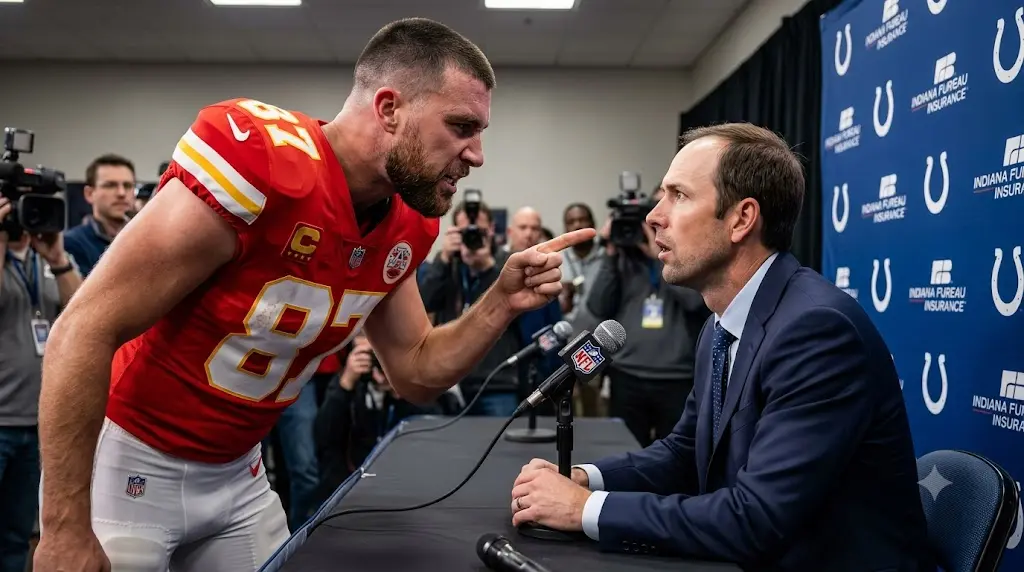
What started as a debate over officiating quickly spilled into a much bigger conversation involving Colts head coach Shane Steichen and Chiefs superstar Travis Kelce. As reactions continued to spread across social media, one alleged response attributed to Kelce became the center of attention.
The message was brutally short:
“Ungrateful people can’t win.”
Just five words. No long explanation. No detailed argument. No attempt to soften the response.
If Kelce actually delivered those words in the context being described online, the statement would represent a remarkably direct reaction to the criticism surrounding the game.
But there is an important distinction between a viral social-media claim and a verified public statement. The quote should not be treated as confirmed unless it can be traced to reliable video, an official transcript, or reputable reporting.
That uncertainty, however, has done little to stop the controversy from exploding online.
Where the Controversy Began
NFL games frequently produce heated debates over officiating, particularly when a single penalty, non-call, or replay decision appears to influence a critical moment.
The Chiefs-Colts matchup was no exception.
Following the game, discussion quickly shifted away from individual performances and toward the officials. Supporters of Indianapolis questioned certain decisions, while Kansas City supporters argued that officiating alone could not explain the final result.
That disagreement created the perfect environment for another postgame controversy.
Steichen, as Indianapolis’ head coach, was placed in the position of answering questions about the game, including the officiating and the decisions that shaped its most important moments.
Whenever an NFL coach publicly questions officiating, the comments can spread rapidly. Coaches are generally expected to focus on their own team, but frustration immediately after a difficult game can make those comments especially powerful.
And this time, the conversation did not remain limited to the Colts.
The name Travis Kelce soon entered the discussion.
Why Kelce’s Alleged Response Exploded
Travis Kelce is already one of the most recognizable players in professional football.
His performance on the field has made him a major figure in the NFL, while his outspoken personality has made his postgame comments particularly attractive to sports media and social-media audiences.
That combination means almost anything attributed to Kelce can generate enormous attention.
The alleged phrase—“Ungrateful people can’t win”—was quickly presented online as a direct response to criticism from Indianapolis.
The wording was short enough to become an instant headline.
There was no complicated football terminology. No lengthy explanation of penalties or formations. Just a sentence that, on its face, sounded personal.
That is exactly why the claim gained traction.
Fans began asking what Kelce supposedly meant. Was he defending Kansas City? Was he responding directly to Steichen? Was he talking about the officials? Or was the quote being taken completely out of context?
Without the original video or transcript, those questions cannot be answered with certainty.
A Few Words Can Create a Huge Story
The most interesting part of the controversy is how little information was needed to create so much speculation.
A long interview can provide context. A complete press conference can reveal a speaker’s intentions. But a single sentence posted online can be interpreted in dozens of different ways.
That is particularly true when the speaker is someone as famous as Kelce.
A quote attributed to him can be reposted thousands of times before anyone checks where it came from.
One account posts it.
Another account rewrites the headline.
A third account adds stronger language.
Eventually, the original context can disappear completely.
What remains is a dramatic headline suggesting that an explosive feud has erupted between two major NFL figures.
That appears to be what happened here.
The Bigger Issue: Officiating
Behind the social-media drama is a familiar NFL debate: how much responsibility should officials receive when a game contains controversial decisions?
Fans naturally focus on moments that could have changed the outcome.
A penalty can extend a drive.
A missed call can stop a scoring opportunity.
A replay decision can reverse what initially appeared to be the result of a play.
When those moments happen in a close game, frustration is inevitable.
Coaches and players may see the same play differently. Fans supporting opposing teams can watch identical footage and reach completely different conclusions.
That is why officiating debates often continue long after the final whistle.
The Chiefs-Colts controversy is simply the latest example of how quickly a football decision can become a national conversation.
Chiefs Fans See the Situation Differently
From Kansas City’s perspective, the focus remains on the result and the performance required to secure the victory.
Chiefs supporters have argued that games are determined by dozens of plays rather than one isolated officiating decision.
Even when a controversial call occurs, both teams have opportunities throughout a game to create separation, protect a lead, recover from mistakes, or make a decisive play.
That argument has fueled another side of the debate.
Some fans believe criticism of the officials takes attention away from what happened during the rest of the game.
Others believe controversial calls deserve to be examined regardless of which team benefited.
And that disagreement is precisely what keeps the story alive.
Indianapolis Fans Have Their Own Perspective
Colts supporters naturally see the game through a different lens.
When a team believes it was affected by an important decision, frustration can remain even after the final whistle.
That frustration does not necessarily mean every disputed call was incorrect. Instead, it reflects how emotionally significant individual moments can become during an NFL game.
For Indianapolis, the controversy is therefore about more than one statement attributed to a Chiefs player.
It is about whether the most important moments of the game were handled fairly and whether the result accurately reflected what happened on the field.
Those are questions that require evidence rather than social-media speculation.
Was Kelce Really Responding to Steichen?
This is the biggest unanswered question.
The viral version of the story presents Kelce’s alleged statement as a direct attack on Steichen.
But without a verified recording or transcript, there is no reliable way to establish that connection.
The phrase may have been taken from another context.
It may have been paraphrased.
It may have been fabricated entirely.
Or it may have been accurately reported but stripped of the surrounding conversation.
Those possibilities are dramatically different.
That is why responsible coverage has to separate what is documented from what is circulating online.
The controversy can still be discussed without treating an unverified quote as established fact.
Social Media Has Changed the Way NFL Drama Spreads
In previous eras, postgame controversies generally traveled through newspapers, television broadcasts, and radio shows.
Today, the process is almost instantaneous.
A short video can reach millions of people within hours.
A provocative quote can become a headline before the original interview is even located.
Fans then add their own interpretations, turning one moment into a much larger narrative.
NFL stars are especially vulnerable to this phenomenon because their words already carry enormous attention.
Kelce is one of the clearest examples.
Whether he is celebrating a touchdown, answering a reporter, joking with teammates, or discussing a difficult loss, his comments can quickly become headlines.
That means every alleged quote involving him deserves careful verification.
The Real Story May Be More Complicated
The most dramatic version of the story suggests an explosive feud between Kelce and Steichen.
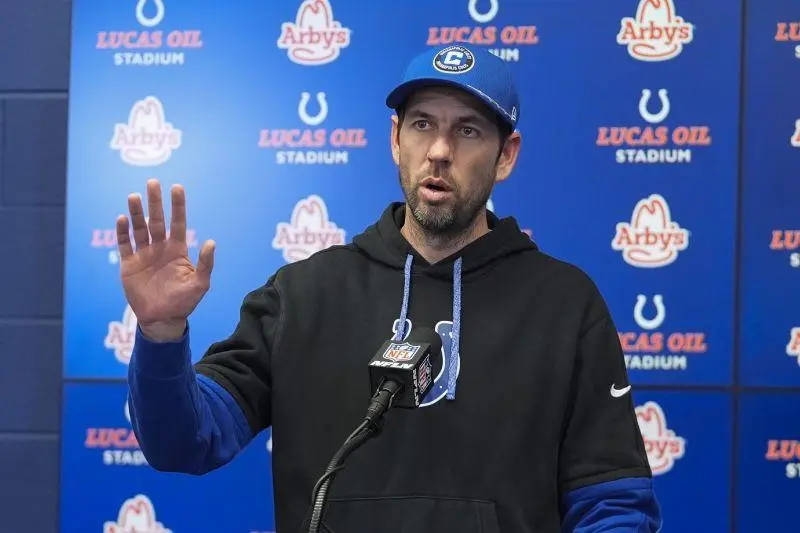
The available online narrative, however, does not necessarily establish that such a feud exists.
There is a major difference between disagreement over a game and an actual personal conflict.
Coaches criticize officiating.
Players defend their teams.
Fans argue over individual plays.
Those things happen constantly in professional sports.
Calling every disagreement a “feud” can make the situation sound more dramatic than the underlying facts support.
The same applies to the alleged eight-word message.
Its impact depends entirely on whether Kelce actually said it, what prompted it, and who he was addressing.
What Happens Next?
The controversy is unlikely to disappear immediately.
Fans will continue searching for the original footage. Analysts may revisit the disputed plays. Supporters from both teams will continue debating the officiating.
And if Kelce or Steichen publicly addresses the situation again, the conversation could take another turn.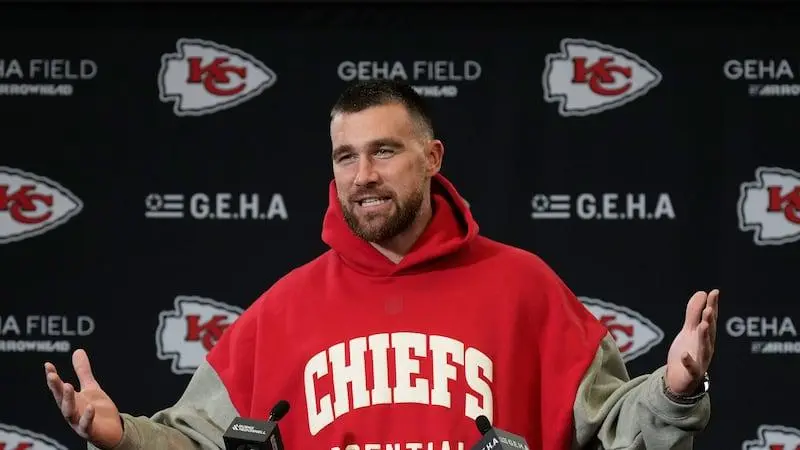
A verified interview could settle the question.
A video could reveal the missing context.
Or another statement could make the controversy even bigger.
For now, the most important distinction is between the football events that can be independently verified and the dramatic quote circulating across social media.
The Chiefs and Colts have already finished their battle on the field.
But online, the final whistle has apparently not ended the argument.
And the biggest question remains unanswered:
Did Travis Kelce really deliver the cold message that is now spreading across the NFL community—or did social media turn an unverified quote into the biggest story of the night?